


Scottish Architecture Baronial..
This Gothic revival — which in Scotland branched into the particular Scots Baronial form — tapped into a renewed interest in medieval architecture, most commonly found in churches and cathedrals, and in a return to the traditional skills of stonemasonry which had been supplanted by the rise of industrialisation and mechanical process in the building trade. Buildings like the Scott Monument or David Bryce’s Fettes College building are almost pure distillations of the neo-Gothic (ie. ‘new’ Gothic) style.
Architects like Bryce and William Burn incorporated these ideas into their architectural visions, and what we recognise as Scots Baronial becomes a recognisable architectural style around the middle of the 19th century.
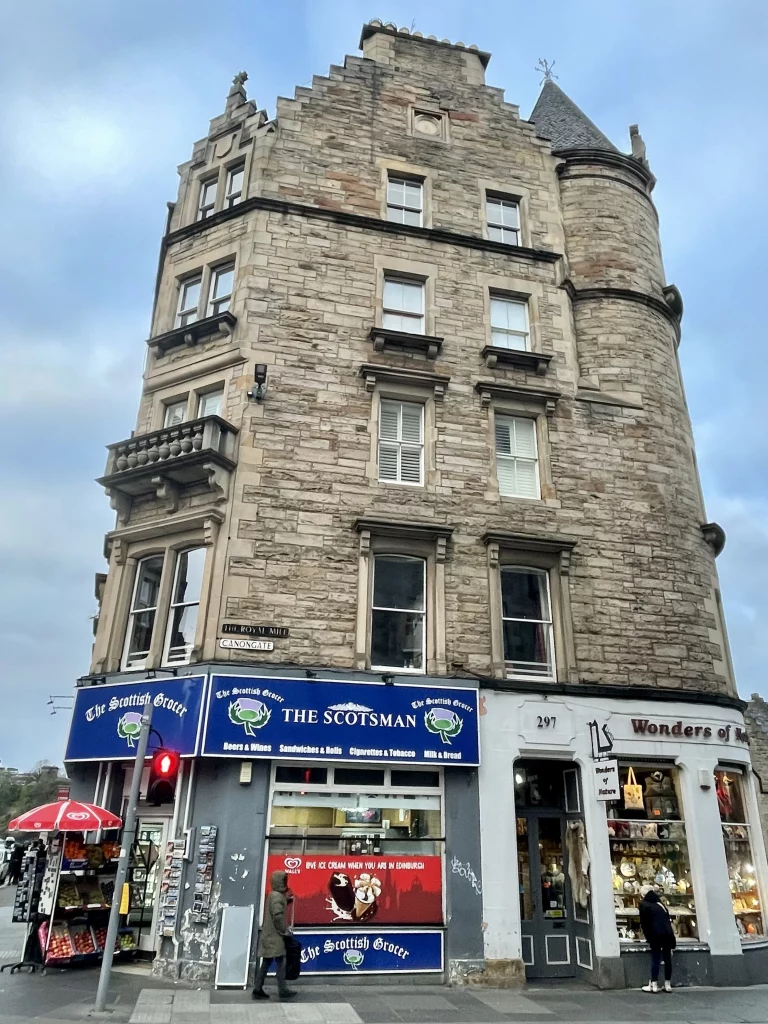
Scots Baronial style, Edinburgh
One of the most easily identifiable features of a Scots Baronial building is the witches’ hat tower, with a conical roof structure over a corner turret. Sometimes these tower structures don’t reach all the way to the ground, and they’re called bartizans. Look for them on the former Castle Hill School building (now a Scotch whisky-based visitor attraction).
These features help give the style its name — taken from the large country houses or baronial properties of the Scottish Highlands, which had evolved as fortified mini-castles, these distinctive towers and rooftops were incorporated into what were ordinary quality properties. That created the illusion that they were a little grander than they really were — more like castles or baronial villas!
Another easily recognised feature of Scots Baronial style is the zigzag gable or roofline over windows — it’s known as a crow step. Flat lines are called cat slides, and the zigzags are crow steps…
Please share me.

Discover more from WILLIAMS WRITINGS.
Subscribe to get the latest posts sent to your email.
Leave a Reply