








William Paterson (April 1658 – 22 January 1719) was a Scottish trader and banker. He was a founding member of the Bank of England and was one of the main proponents of the catastrophic Darien scheme. Later he became an advocate of union with England.
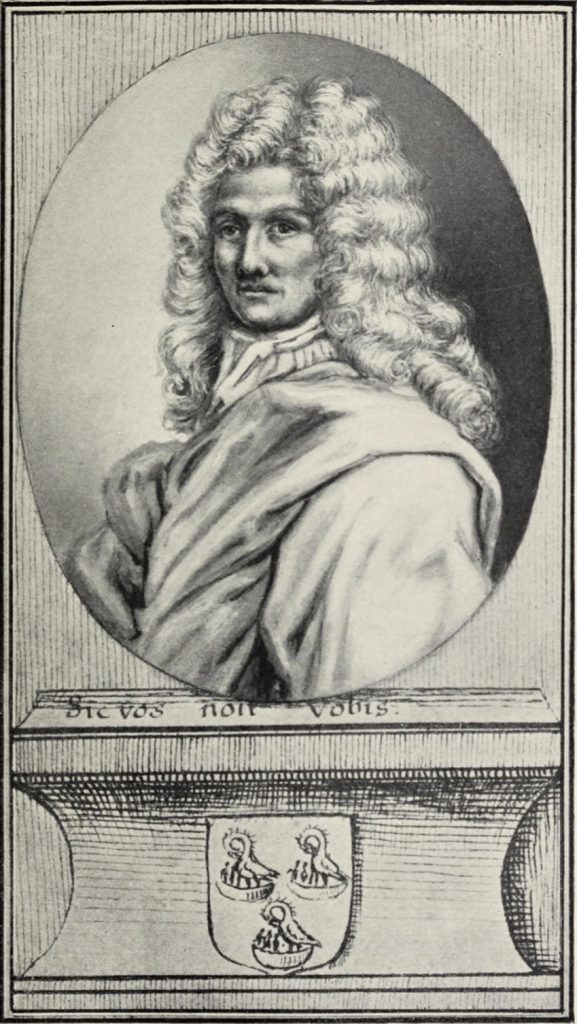
Early life
William Paterson was born in his parents’ farmhouse at Tinwald in Dumfriesshire, Scotland, and lived with them until he was seventeen, when he emigrated first (briefly) to Bristol and then to the Bahamas, although accounts differ as to the duration of his stays. During his time in the West Indies he first conceived the idea of the Darién scheme, his plan to create a colony on the isthmus of Panama, facilitating trade with the Far East. While in the West Indies, it is said that he acted as a merchant, developing a reputation for business acumen and dealings with local buccaneers. Walter Herries claimed that the English privateer William Dampier shared his knowledge of Darién with Paterson.
Career
Paterson returned to Europe by the middle of the 1680s, and attempted to convince the English government under James II to undertake the Darién scheme. When they refused, he tried again to persuade the governments of the Holy Roman Empire, the Dutch Republic and Bradenburg to establish a colony in Panama, but failed in each case.
Paterson then went to London in 1687 and made his fortune with foreign trade (primarily through the slave trade with the West Indies) in the Merchant Taylors’ Company. He also helped to found a company for supplying water to North London from the Hampstead Hills, known as the Hampstead Water Company which existed until the late 19th century.
In 1694, he co-founded the Bank of England. It was said that the project originated with him in 1691, as described in his pamphlet A Brief Account of the Intended Bank of England, to act as the English government’s banker. He proposed a loan of £1.2m to the government; in return the subscribers would be incorporated as The Governor and Company of the Bank of England with banking privileges including the issue of notes. The Royal Charter was granted on 27 July 1694. On the foundation of the bank in 1694 he became a director. In 1695, owing to a disagreement with his colleagues, he withdrew from the board and devoted himself to the colony of Darien, unsuccessfully planted in 1698.
Do you think he was brilliant?
Please share me.

Discover more from WILLIAMS WRITINGS.
Subscribe to get the latest posts sent to your email.




Love the history.. great job.. keep up the good work.. I’m like %25 Scottish 😁
awe thats cool mate and thank you, welcome anytime…
Such a fascinating write-up on William Paterson! You’ve captured history with such clarity and depth—it felt like stepping back into the 17th century. Truly awesome work!
awe cheers pal, glad you like it, and thanks for all your kind comments..
Cheers to you, my friend! Your words sparkle like kindness poured into a glass of joy. I’m truly glad my lines resonated with you, and your thoughtful comments mean more than you know. May our exchange of thoughts keep flowing like a celebration that never ends.
well I hope I am kind, and you seem kind too so its all good..
Kindness recognizes kindness, my friend.
Your words carry a gentle light,
and I’m grateful it shines here.
May we keep exchanging sparks of goodness—
because that’s what makes everything feel right.
absolutely, lets all be kind, the World needs it, have a good one Harish.
Thanks for the information, Billy.
Thanks for coming over Timothy.. I appreciate your kind comments.
I’m not sure he was brilliant, but certainly persistent.
that he was Bev, thanks again for all your kind reviews x