Few experiences can match the trauma of learning that a missing loved one’s body has been located. But what about never finding a body at all? The case of London-based victim Suzy Lamplugh is one of the most oft-Googled in the U.K. The public’s enduring investment in her case stems in part from the uncertainty of Lamplugh’s whereabouts. It also vexes the public because the case has come tantalizingly close to being solved – only for answers to again and again slip from reach.
In July of 1986, the 25-year-old real estate agent set out to show a property in Fulham, London. She never returned to her office. When Lamplugh’s coworkers reported her missing, police visited her flat, finding nothing to indicate that anything suspicious had taken place. Lamplugh had shared that she was going to meet a “Mr. Kipper,” though there were subsequently no records found for this individual.
Authorities soon learned that the company car Lamplugh drove had been found unlocked and haphazardly parked. The positioning of the seat suggested that someone taller than Lamplugh had been driving.
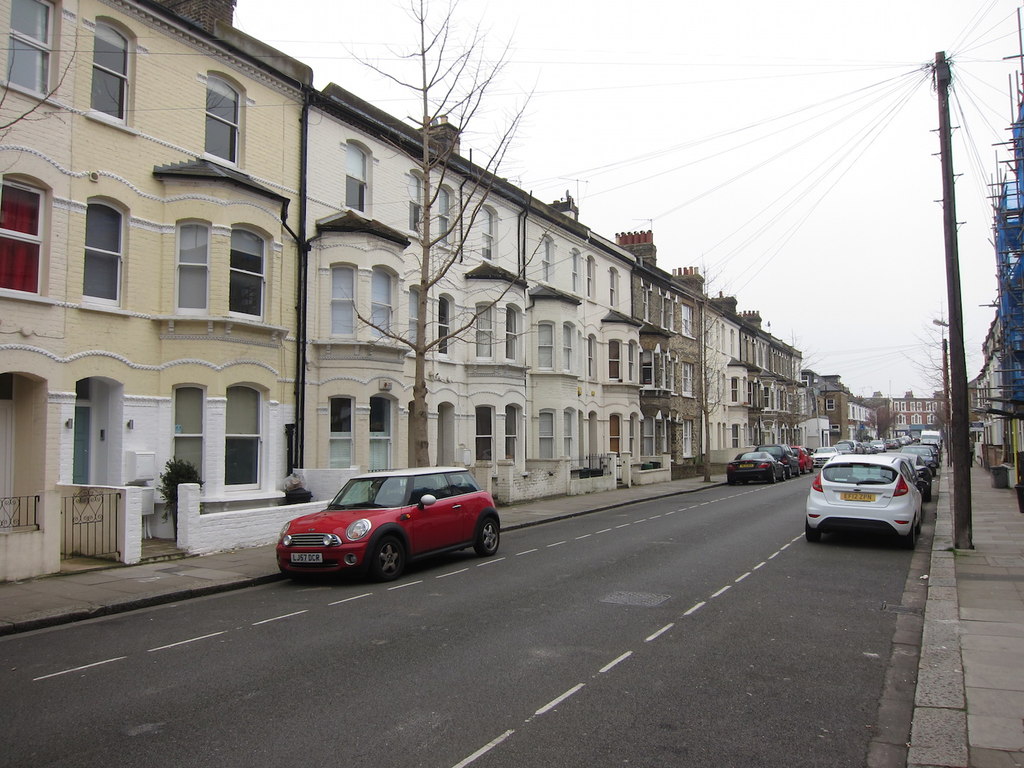
Suzy Lamplugh was showing a man a property at 37 Shorrolds Road before she disappeared on July28, 1986. (Source: Oasthouse Archive, via Wikimedia Commons)
A flurry of witnesses came forward. Before she went missing, Lamplugh had left personal items behind at a pub and planned to pick them up the evening of her disappearance. The owner reported receiving a phone call from someone named “Sarah,” asking him to have Lamplugh call her. Shortly after, he claimed he received a call from a police officer also asking for Lamplugh, but this was prior to the start of the investigation.
Some reported seeing Lamplugh arguing with a man in a dark BMW; others said they spotted Lamplugh with a man who was holding a bottle of champagne. Roses had also been delivered to the office by an unknown man days prior to her disappearance.
Despite the number of leads, no arrests were made.
Six months into the investigation, a tip came in about an abandoned BMW that was registered to a man who would sometimes go by a similar name, “Mr. Kiper.” However, he had been in Belgium at the time and was cleared.
Shortly after, a police sketch based on witness accounts led to another compelling suspect. The image strongly resembled Birmingham-born John Canaan, who had been previously convicted for beating his girlfriend and raping another woman. He was on work release at the time of Lamplugh’s murder, but had more recently been arrested and convicted for murdering 29-year-old Shirley Banks. He also had attempted to abduct other women leading up to Banks’s murder; had showed up unexpectedly at a house viewing, only to leave once he saw a man was present with the female agent; drove a dark BMW; and his nickname in prison had been “Kipper.”
Case closed, right? Astonishingly, police insisted there still wasn’t enough evidence to charge Canaan. At least Canaan was already in a place where he couldn’t hurt anyone else. Or could he?
Discover more from WILLIAMS WRITINGS.
Subscribe to get the latest posts sent to your email.





It remains a mystery. I hope they solve it one day for the sake of her family.
Yes indeed but cold cases generally don’t.. Thank you.
Maybe she is still alive and enjoying a life of freedom with the person who sent her flowers.
Haha yes bev that is a possibility .thank you.