– In the 18th and 19th Century in the Highlands, coasts and Islands of Scotland lighting methods and the availability of fuels such as comparatively expensive candles was limited. This meant that adaptations of rush lighting and the use of oil from fish in coastal districts was commonplace. This was alongside the basic glow from the light of fires in open hearth dwellings/croft houses.
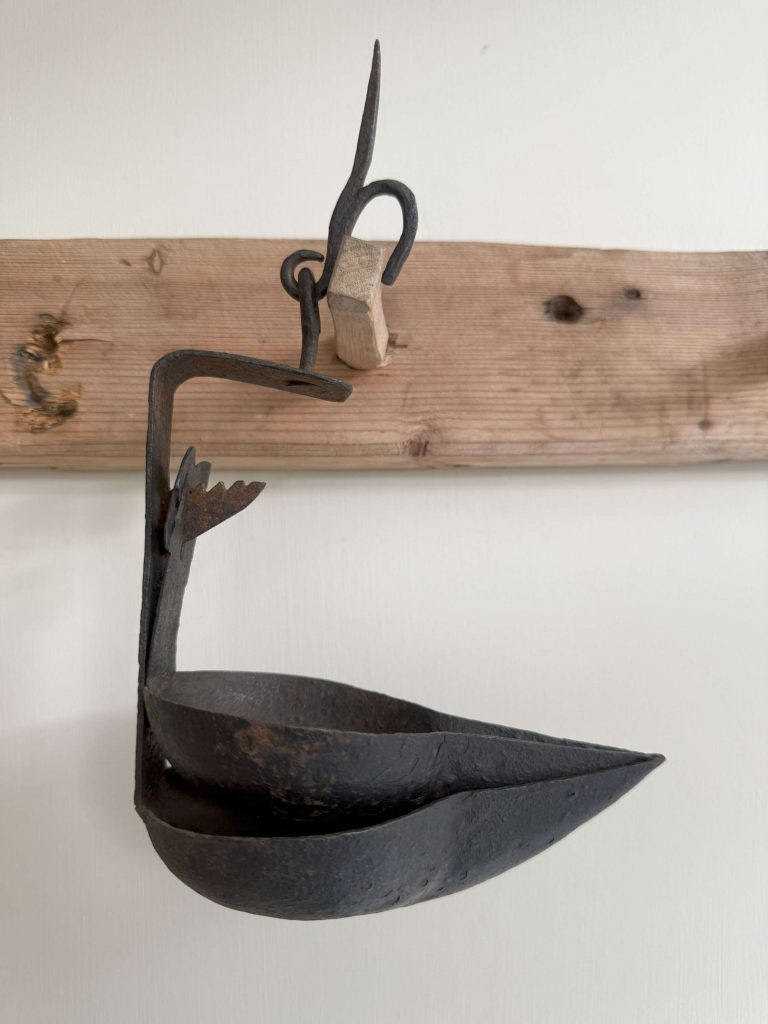
– This wrought iron, blacksmith made oil lamp or betty was handmade by hammering out a plate of iron to form into a mould. This was suspended from a wall, nail or beam to provide an adaptable and movable, additional source of light.
– The good size hanging oil lamp is handmade in wrought iron and swings from a short hanging hook and spike down to the lamp attachment located at the top of the oil lamp bracket.
– Cruisie lamps vary a great deal in design and shape, dependent on the availability of iron and the purpose for which they were used.
– This design has two circular decorative eyes to the upper oil pan as shown in the images. The upper pan sits on a notched bracket suspended over the lower pan.
– This is a standard approach with a double pan arrangement (which allowed them to catch the oil drips and not waste anything).
– Cruisie lamps consist of leaf-shaped vessels in which to hold the oil, into which a floating rush or appropriate wick was placed from the neck to act as a wick soaking up the oil to burn as a bright light source. In modern times people utilise tea-lights or olive oil into these cruisie lamps with an appropriate wick to reproduce soft/atmospheric lighting.
A simply built, utility, vernacular item with considerable charm from the Scotland ready for another 135+ years of utility.
Discover more from WILLIAMS WRITINGS.
Subscribe to get the latest posts sent to your email.