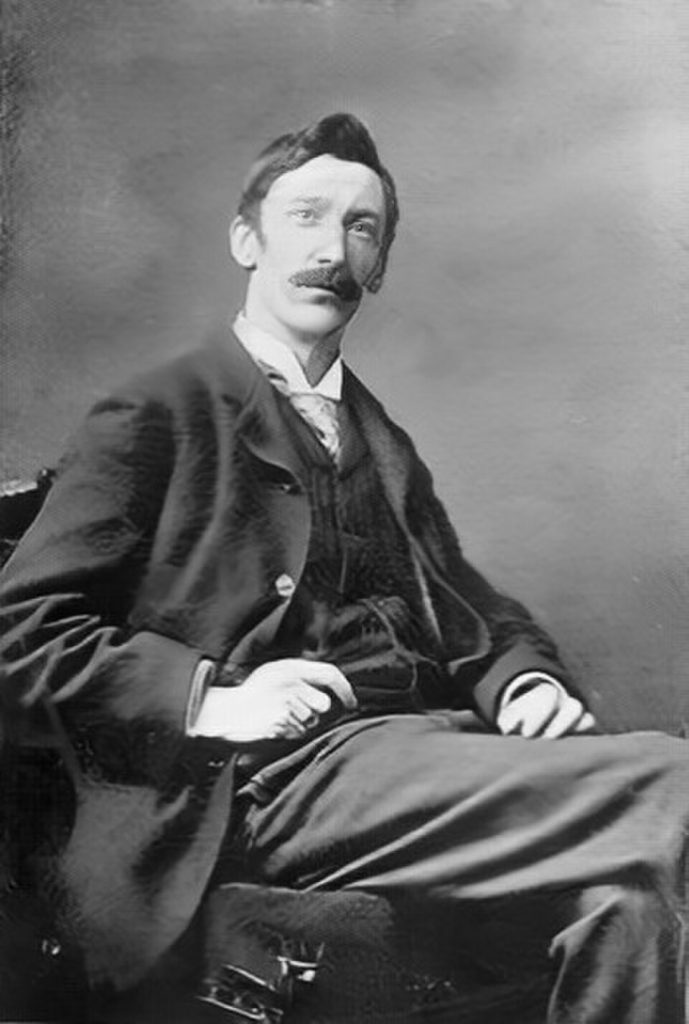
Although Mackenzie and Douglas achieved the greatest reputations, other Scots explorer-writers earned lesser fame as well. One was merchant and adventurer Alexander Forbes. In California: A History of Upper and Lower California (1839), Forbes penned what is probably the first full account in English of the Pacific Coast. A friend of the Franciscan padres, who had established missions in the area, Forbes drew upon their knowledge and experience for his study. He especially relied upon Fr. Francisco Palou’s A Life of the Chief Missionary Father Junipero Serra, published in Mexico in 1787; an unpublished manuscript of a 1715 journey from Sonora to Upper California; and the 1776 journal of the travels of Padres Dominguez and Escalante across the Southwest. Staunch Protestant though he was, Forbes found much to praise in the Franciscan priests.
Although he admired the Franciscans as individuals—especially Father Antonio Peyri, the head of Mission San Luis Rey for thirty-four years—Forbes had little good to say about the Spanish mission system in general. He compared the California mission system to the enslavement of the Blacks in the West Indies and observed that although the Spanish termed themselves “rational creatures” (gente de razon) , they called the Natives “beasts” (bestias).
His descriptions of Spanish agricultural innovations were extensive. He praised California cattle, potatoes, flax, grapes, and olives, but he termed their farming methods “most rude and backward.” Still, even Forbes’s cautious praise of Spanish enterprise marked him out as unique, since the Black Legend fueled most British commentaries on early California. For example, English traveler George Ruxton could not find a single redeeming Mexican trait when he visited California in 1847.
Though Forbes dismissed the mission system and Spanish agriculture on the whole, he was fascinated by the California landscape. Since he viewed California as a unique region having nothing in common with Mexico save Spanish culture, he predicted that it would eventually become a major power in its own right. Because Mexico owed Britain monies due on a recent loan, Forbes suggested the Mexican government might cede California to Britain as full payment. The British Isles teemed with a surplus population of “human beings with superior intellects,” he noted. If they could only be settled in California, they would turn the region into a breadbasket. If California were placed under good management and with a British population, the region would most certainly realize all that had been predicted for it.
The idea that Britain might colonize California received serious consideration in London. But the vast lands of Australia, Canada, and New Zealand provided sufficient alternative outlets for surplus population, so no serious attempts were launched. By the time of the 1849 Gold Rush, all such ideas had been abandoned.
But others read Forbes’s writings, too. By the late 1830s, native Californians worried aloud about the impending invasion by the Americans. Even though the Russians were firmly established in Fort Ross at Bodega Bay, they were not half as feared as the dreaded “Yankees.” If Santa Anna had won in Texas in 1836 (where, incidentally, five Scots, including a piper, died at the Alamo), rumor had it that the Americans would have overrun California within a year. Forbes’s predictions that California would come under civic rather than ecclesiastical control and that an English-speaking population utilizing western management techniques would turn it into a cornucopia were eventually realized, but by a far different group of people than he had envisioned.
Forbes was not the only Scot who tried to make his fortune in pre—Gold Rush California. At least fifty identifiable Scots plied their trade in this region well before the Americans arrived. Their number included Mary Anderson, wife of a Monterey shipbuilder, who is usually cited as the first English speaking woman on the West Coast and the mother of the first child of foreign parents, and Alfred Robinson, the first traveler to sketch the San Luis Rey Mission in 1829. Other Scots included Hugo Reid of Cardross, who had studied at Cambridge. His twenty-two essays, published as Letters on the Los Angeles County Indians (the tribe of his wife), became a valuable source for anthropologists and historians. William Money’s The Reform of the New Testament Church, set in parallel columns of Spanish and English type, has been hailed as the first book published in Los Angeles. Money has also earned the dubious distinction of being the “first outstanding eccentric of Los Angeles,” thus inaugurating a lengthy tradition.
The books penned by these Scottish explorers of the American West not only reflected the influence of the Enlightenment, they also achieved the status of classics in western writing. The Journal of Captain Cook’s Last Voyage to the Pacific Ocean (1781), Menzies’ Journals (1792—94), Mackenzie’s Voyages (1801), Bradbury’s Travels (1877), Douglas’s Journal (1828—29), Forbes’s California (1839), and Reid’s Letters (1852) have become vital firsthand accounts for understanding this period. One might also include Canadian Alexander Ross’s studies: Manitoba, Adventures of the First Settlers on the Oregon or Columbia River (1849), his two-volume The Fur Hunters of the Far West (1852) and The Red River Settlement (1853). In fact, no other books of the era began to approach these Scottish accounts, either for accuracy or for historical significance. The legacy of the Scottish Enlightenment traveled well beyond the north of Britain. It had a major impact on the American West as well.
Discover more from WILLIAMS WRITINGS.
Subscribe to get the latest posts sent to your email.