





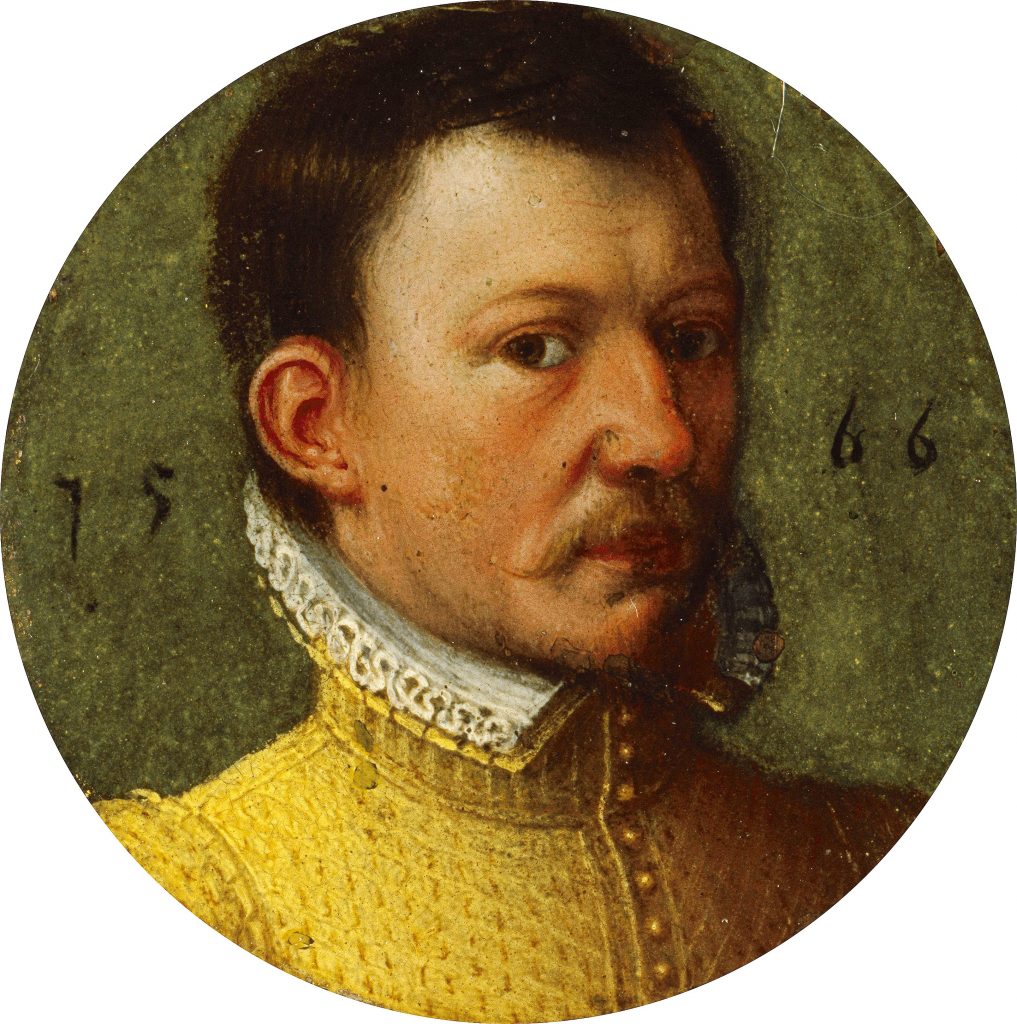
James Hepburn, 1st Duke of Orkney and 4th Earl of Bothwell (c. 1534 – 14 April 1578), better known simply as Lord Bothwell, was the third husband of Mary, Queen of Scots. He was accused of the murder of Mary’s second husband, Henry Stuart, Lord Darnley, a charge of which he was acquitted. His marriage to Mary was controversial and divided the country; when he fled the growing rebellion to Norway, he was arrested and lived the rest of his life imprisoned in Denmark.
Early life
James Hepburn was the son of Patrick Hepburn, 3rd Earl of Bothwell, and Agnes Sinclair (d. 1572), daughter of Henry, Lord Sinclair, and was styled the Master of Bothwell from birth. He succeeded his father as Earl of Bothwell and Lord Hailes in 1556.
Marriages
As Lord High Admiral of Scotland, Lord Bothwell visited Copenhagen around 1559. He fell in love with Anna Tronds, known in English as Anna Throndsen or Anna Rustung. She was a Norwegian noblewoman whose father, Kristoffer Trondson, a famous Norwegian admiral, was serving as Danish Royal Consul. After their engagement, or more likely marriage under Norwegian law, Anna left with Bothwell. In Flanders, he said he was out of money and asked Anna to sell all her possessions. She complied and visited her family in Denmark to ask for more money. Anna was unhappy and apparently given to complaining about Bothwell. His treatment of Anna played a part in his eventual downfall.
In February 1566, Bothwell married Lady Jean Gordon, daughter of the 4th Earl of Huntly and sister of Sir John Gordon and the 5th Earl of Huntly. They were divorced on 7 May 1567, citing his adultery with her servant Bessie Crawford as cause. He married Mary, Queen of Scots, eight days later.
Meeting Queen Mary in France
Lord Bothwell appears to have met Queen Mary when he visited the French Court in the autumn of 1560, after he left Anna Rustung in Flanders. He was kindly received by the Queen and her husband, King Francis II of France, and, as he put it: “The Queen recompensed me more liberally and honourably than I had deserved” – receiving 600 Crowns and the post and salary of gentleman of the French King’s Chamber. He visited France again in the spring of 1561, and by 5 July was back in Paris for the third time – this time accompanied by the Bishop of Orkney and the Earl of Eglinton. By August, the widowed Queen was on her way back to Scotland in a French galley, some of the organisation having been dealt with by Bothwell in his naval capacity.
Have you seen Mary Queen of Scots Movie?
Please share me.

Discover more from WILLIAMS WRITINGS.
Subscribe to get the latest posts sent to your email.


Seems like a lot of murders take place in this beautiful land of Scotland. He must have been a charming fellow to have all those women fall at his feet.
indeed bev he was a bit of a womaniser, and yes it all happens in Scotland lol, take care and thank you.
You’ve brought history to life with a clarity that turns events into compelling human drama.
Bothwell’s tale emerges not just as political intrigue but as a layered story of power, passion, and tragedy.
Your writing gives historical figures a voice that echoes far beyond their time.
awe thank you hary, he was a character..
Haha, that character really brought the moment to life.
I’m glad you enjoyed it as much as I enjoyed creating it.
Your reaction makes the whole thing even more memorable.
it was excellent mate.